South Korea at a Crossroads: Will the Next Revolution Build Weapons or Build Human Potential?
South Korea faces a fundamental question in 2026: how can a technologically advanced nation transform economic strength, political disagreement and social pressure into a future of greater security, dignity and prosperity for every generation?
Recent street demonstrations and labor disputes reveal different dimensions of this challenge. Workers are demanding better compensation, secure employment and a stronger voice in negotiations. Political demonstrators are contesting government decisions and national security policies. Young people need opportunities to build independent futures in an economy shaped by global competition, automation and rapid technological change.
These developments should not be reduced to one cause or one political ideology. They reflect competing interests, genuine security concerns and different expectations about how national prosperity should be shared.
But they also create an opportunity: to move from confrontation toward cooperation, from short-term political victories toward long-term human development, and from treating peace as an abstract ideal toward building the practical foundations of peaceful societies.
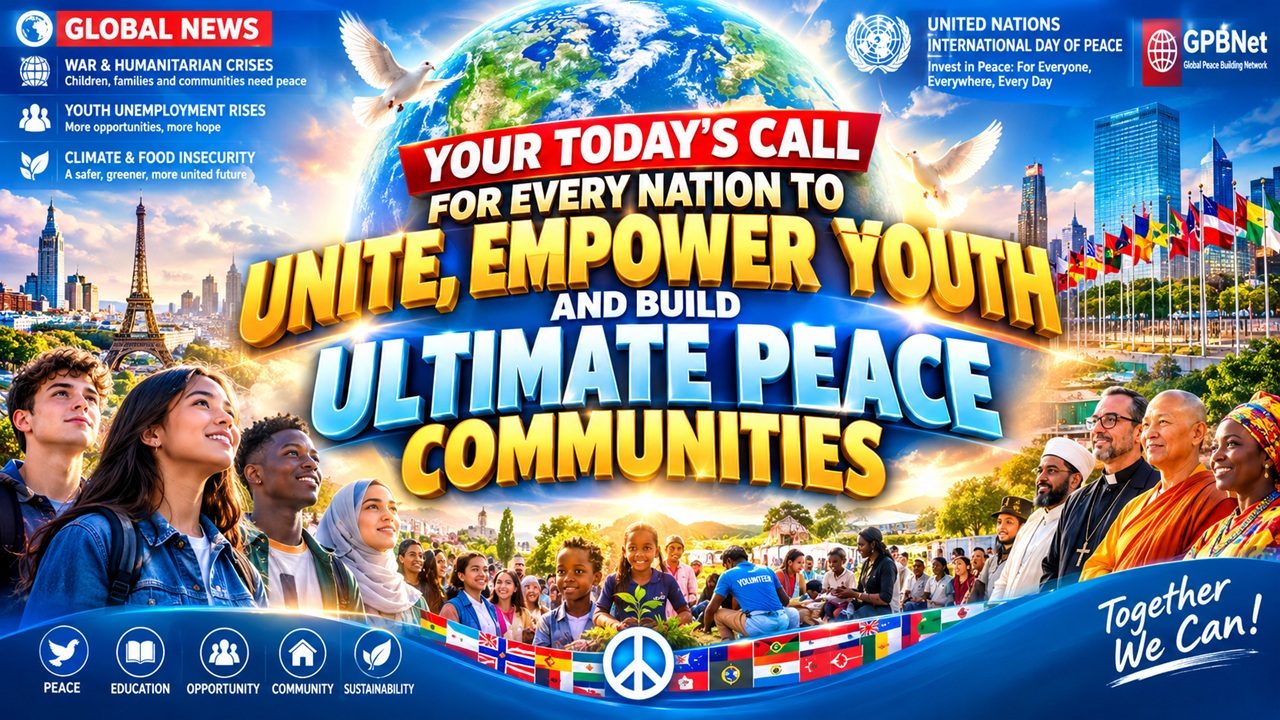
The True Love Revolution, promoted through GPBNet, offers a vision centered on daily cooperation between leaders and citizens, economic participation, mutual prosperity and the pursuit of global peace.
Its challenge is to turn that vision into measurable public benefit.
The principle is straightforward: a country becomes stronger when its people can live in dignity, feed their families, educate their children, create businesses and participate meaningfully in decisions that shape their future.
1. What Recent South Korean Protests and Strikes Reveal
Recent reporting provides concrete examples of the pressures facing South Korea.
Hyundai Motor workers: wages, retirement and the future of employment
In August 2026, Reuters reported that Hyundai Motor’s union began its first full strike in a decade after wage negotiations stalled. The dispute involved approximately 40,000 union members expected to walk out, with demands addressing compensation, retirement age, bonuses and protection against the employment consequences of artificial intelligence and automation.
The dispute also affected production, highlighting how unresolved labor conflicts can create costs for workers, companies, suppliers and the wider economy.
Source: Reuters, Hyundai Motor's South Korean union stages first full strike in a decade over pay.
https://www.reuters.com/business/world-at-work/hyundai-motors-south-korean-union-stages-first-full-strike-10-years-over-wage-talks-2026-08-21/
The deeper lesson is that technological progress must deliver benefits to people, not merely increase production or profits. Employers need competitive businesses, workers need fair treatment, and younger generations need credible routes into skilled employment and entrepreneurship.
A practical solution: establish regular labor-management negotiations, transparent productivity-sharing agreements, retraining programs and pathways for workers to participate in the economic opportunities created by automation.
Samsung Biologics: the cost of unresolved workplace conflict
In October 2026, reporting by SBS described a planned second general strike at Samsung Biologics beginning on October 26, following unsuccessful negotiations over wage increases and personnel policies.
The dispute illustrates a recurring problem: when negotiations fail to resolve fundamental disagreements, confrontation can become the default mechanism for expressing demands.
Source: SBS News, Samsung Biologics Union Plans Second General Strike Starting Oct. 26.
https://news.sbs.co.kr/english/article.do?news_id=N1008780885
The solution is not to dismiss workers' concerns or to assume that every union demand is automatically justified. It is to establish credible procedures that allow both sides to present evidence, negotiate in good faith, protect lawful labor rights and reach agreements before conflicts escalate.
A practical solution: independent mediation, clear wage-review procedures, transparent grievance systems and measurable commitments from both employers and labor representatives.
Public-sector workers: direct negotiations and secure employment
On October 24, 2026, Yonhap reported that approximately 4,000 members of South Korea's public transport and social services union gathered in central Seoul. Their demands included stronger negotiations with principal contractors and the government, more secure employment and the expansion of good-quality jobs.
Source: Yonhap News Agency, October 24, 2026.
https://www.yna.co.kr/view/AKR20261024036000004
These demands raise an important question: how can a modern economy ensure that people who perform essential services have fair employment conditions and a meaningful voice in the decisions affecting their livelihoods?
A practical solution: improve collective bargaining arrangements, clarify accountability across subcontracting relationships and evaluate public procurement by service quality, working conditions and long-term social value—not cost alone.
Political demonstrations: disagreement must lead to accountable governance
On October 3, 2026, Yonhap reported a rally in central Seoul involving opposition lawmakers criticizing President Lee Jae Myung's prosecution reform and the government's handling of a security incident involving North Korean mines.
The demonstration reflected political disagreement over justice, leadership and national security.
Source: Yonhap News Agency.
https://en.yna.co.kr/view/AEN20261003003700315
A healthy society does not eliminate disagreement. It creates institutions through which disagreement can be expressed peacefully, investigated fairly and resolved through democratic procedures.
A practical solution: protect peaceful assembly, strengthen institutional transparency, encourage evidence-based public debate and ensure that political accountability applies consistently regardless of party affiliation.
What these events have in common
Labor strikes and political demonstrations are not identical, and they do not all share the same cause. Nevertheless, they point toward several areas where practical reform can make a difference:
- Trust between institutions and the people they serve.
- Fair and transparent negotiations.
- Employment security during technological transformation.
- Accountability for decisions involving public money.
- Better opportunities for young people to create economic value.
- A national development strategy that treats human well-being as a central measure of success.
The goal should not be to silence public disagreement. It should be to make peaceful resolution more effective than prolonged confrontation.
2. South Korea's Military Budget: Security, Opportunity and the Human Development Question
South Korea's defense expenditure is a significant part of the national budget, and its security environment cannot be ignored.
According to South Korea's official defense budget data, the approved 2026 defense budget is approximately 65.86 trillion Korean won, an increase of 7.5% from 2025. It represents approximately 2.37% of GDP and 13% of the general government budget.
Official source: South Korean Ministry of National Defense.
https://mnd.go.kr/mndEN/373/subview.do
South Korea faces genuine security concerns, including North Korea's military capabilities and wider regional tensions. Responsible policy must protect the population and avoid pretending that security risks can simply be wished away.
At the same time, every budget should be evaluated in terms of effectiveness, opportunity costs and the public interest.
How can South Korea maintain credible national defense while also investing in children, education, affordable living, healthcare, employment, scientific innovation and entrepreneurship?
This is a legitimate question for democratic debate.
The answer is not necessarily to eliminate defense spending or transfer every defense-related resource to social programs. Such a policy could introduce serious security risks and would require careful economic and strategic analysis.
A more constructive approach is to examine which expenditures provide demonstrable security benefits, which projects suffer from inefficiency, and where responsible savings or changes in priorities could release resources for civilian development.
A human-centered national budget
South Korea can strengthen its future by examining five priorities alongside its security commitments:
- Children and food security: improve access to nutritious meals, early childhood support and assistance for families facing hardship.
- Education and skills: expand practical training in technology, manufacturing, business management and emerging industries.
- Youth entrepreneurship: make it easier for young people to test business ideas, obtain mentorship and access transparent startup funding.
- Healthcare and family well-being: invest in accessible services and prevention, particularly for vulnerable households.
- Peacebuilding and diplomacy: support conflict prevention, regional dialogue and international cooperation that reduce the risks of escalation.
The principle is not that national defense and social investment must always compete. A stable, educated, economically resilient population is also an important foundation of national security.
The objective should be to protect the country while ensuring that national wealth creates visible benefits for the people who sustain it.
3. GPBNet and the True Love Revolution: Turning Cooperation Into a Practical Development Model
Official GPBNet website: https://1gpb.net/
The True Love Revolution vision can be presented as a call to change how leaders, entrepreneurs, workers, families and communities cooperate in daily life.
Its central proposition is that lasting prosperity cannot be built through political power, economic competition or military strength alone. It also requires trust, responsibility, mutual support and opportunities for people to contribute to shared progress.
GPBNet can serve as a platform for communicating this vision and inviting people to explore practical forms of cooperation.
To create public value, however, a vision must move beyond slogans. It needs clear objectives, transparent governance, measurable results and voluntary participation.
Pillar One: Unite leaders and citizens through practical cooperation
Governments, businesses, labor organizations, universities and communities have different responsibilities, but they share an interest in a stable and prosperous society.
A practical GPBNet cooperation model could encourage:
- Public forums where citizens can present local development priorities.
- Regular dialogue between employers, workers and community representatives.
- Partnerships connecting young entrepreneurs with experienced business mentors.
- Voluntary community projects addressing food insecurity, education and environmental challenges.
- Transparent reporting on commitments, spending and outcomes.
The objective is not to eliminate legitimate differences between social groups. It is to create ways for those differences to produce better decisions rather than permanent hostility.
Pillar Two: Make youth entrepreneurship a cornerstone of peace
Young people need more than motivational messages. They need the practical tools to become economically independent.
A new generation of businesses can create jobs, solve community problems and help distribute economic opportunity more widely.
A youth entrepreneurship initiative inspired by GPBNet could connect participants with:
- Business education and mentoring.
- Startup incubators and local enterprise networks.
- Ethical investors and transparent funding opportunities.
- Digital tools, artificial intelligence and practical technical training.
- Cooperative enterprises and community-based businesses.
- Export opportunities and international partnerships.
The goal should be to help young people build sustainable businesses, not simply encourage them to join a movement.
Projects should publish clear eligibility criteria, funding arrangements, conflicts of interest and results. Participation should remain voluntary, and business opportunities should be evaluated on their merits.
Pillar Three: Fight hunger through measurable community action
A society cannot claim comprehensive prosperity while children and families lack access to adequate food.
GPBNet supporters could promote partnerships among farms, food producers, supermarkets, local governments, charities and community kitchens to reduce food waste and improve access to nutritious meals.
Possible initiatives include surplus-food redistribution, school meal partnerships, community food programs and support for families facing temporary financial hardship.
Every initiative should measure the number of people served, the amount of food recovered, the quality of assistance and the resources required.
This would transform the language of mutual love into practical assistance that people can see and evaluate.
Pillar Four: Connect economic prosperity with environmental responsibility
Economic development should not leave future generations with avoidable pollution, damaged ecosystems and unsustainable waste.
A human-centered development agenda should promote clean technologies, repair and reuse, renewable energy where appropriate, efficient public transport and responsible production.
Businesses can be encouraged to demonstrate that profitability and environmental responsibility can reinforce each other.
Pillar Five: Make peace a measurable public objective
Global peace is not achieved through declarations alone. It requires institutions, incentives and relationships that make cooperation more sustainable than conflict.
South Korea can contribute through diplomacy, educational exchanges, humanitarian cooperation, scientific partnerships and initiatives that encourage communication across political and national divisions.
GPBNet's contribution would be most credible if it focused on practical, nonviolent cooperation and reported its outcomes openly.
The True Love Revolution should be measured by the lives improved, the opportunities created, the conflicts peacefully resolved and the trust built between people.
4. A Practical Proposal for South Korea: From Street Confrontation to Social Cooperation
The following proposal translates the GPBNet vision into steps that South Korean communities and institutions could evaluate and adapt.
First 30 days: listen, document and build trust
- Organize voluntary community consultations with workers, employers, young people, educators and local organizations.
- Document the most urgent local concerns, including employment, living costs, education and food insecurity.
- Invite qualified mediators to identify practical approaches to recurring labor disputes.
- Publish a clear set of principles for peaceful participation, transparency and non-discrimination.
Days 31–90: launch measurable pilot projects
- Establish youth business mentoring groups with qualified volunteer mentors.
- Develop partnerships with existing food banks and community meal programs.
- Convene employer-worker dialogue sessions around specific workplace disputes.
- Publish a public register of pilot projects, funding sources, objectives and progress indicators.
Months 4–12: evaluate and expand what works
- Assess whether participating young entrepreneurs establish viable businesses or create employment.
- Measure food assistance delivered and the number of households supported.
- Evaluate whether mediation reduces the duration or recurrence of selected workplace disputes.
- Publish independent reviews of spending and outcomes.
- Expand successful projects only where evidence supports their effectiveness.
This approach would not solve every structural problem in South Korea within a year. It would, however, establish a credible way to move from broad aspirations to demonstrable public benefit.
Five principles for peaceful change
- Nonviolence: protect peaceful protest and reject political violence.
- Transparency: make funding, governance and results open to scrutiny.
- Inclusion: welcome participation regardless of political affiliation, religion, background or economic status.
- Accountability: assess leaders and initiatives by their actions and measurable outcomes.
- Human dignity: treat people as participants in development, not instruments of political or economic power.
The strength of a movement should be demonstrated by the quality of its work, the freedom of its participants and the trust it earns.
5. Why Global Peace Begins With Everyday Economic Cooperation
Wars and military spending are shaped by complex security, political and historical conditions. They cannot be attributed to a single cause, and social spending alone cannot guarantee that conflicts will disappear.
Nevertheless, communities that lack opportunity, institutions that fail to earn trust and economies that leave people without realistic prospects face serious development challenges.
Investment in human potential can help address some of those challenges.
When a young person can build a viable business, when a child has access to nutritious food, when a worker can negotiate fairly and when citizens can influence public priorities through peaceful democratic institutions, the foundations of social stability become stronger.
This is the practical connection between local prosperity and global peace.
The True Love Revolution can communicate that connection by encouraging people to move beyond hostility and work on shared problems without requiring everyone to adopt the same ideology.
GPBNet can help advance the conversation if it welcomes open evaluation, meaningful partnerships and concrete results.
The ultimate objective is not merely to criticize existing institutions. It is to demonstrate how better cooperation can improve people's lives.
6. The New Korean Revolution Hymn: A Call for Human Dignity and Global Peace
A new Korean revolution worthy of future generations should be understood as a peaceful transformation in public priorities: a movement toward dignity, opportunity, accountability and cooperation.
The accompanying hymn can serve as a cultural expression of that aspiration.
Listen to the proposed movement hymn:
https://youtu.be/UKCgkB7cGLk?si=pD6bfOzjU7KAvRyt
The song should be presented as an invitation to reflect, participate and build—not as a demand for political conformity.
Its message can connect the concerns of workers, the ambitions of young entrepreneurs, the hopes of families and the responsibilities of leaders around a shared ideal: a society in which human development matters as much as economic growth and peace is pursued through practical action.
A new revolution does not need to mean violence, the destruction of democratic institutions or hostility toward political opponents.
It can mean a determined and peaceful change in what society rewards, what public money prioritizes and how people cooperate.
The most meaningful anthem is one whose principles are reflected in everyday actions.
7. How GPBNet Can Turn Its Message Into a Global Cooperation Network
For a movement promoting mutual prosperity, every official communication channel should direct interested people toward clear information and concrete opportunities to participate.
The proposed network can be organized around four functions:
- Information: communicate the vision, publish proposals and discuss relevant developments.
- Community: invite voluntary participation in local projects and public discussions.
- Entrepreneurship: connect young people with education, mentoring and legitimate business opportunities.
- Accountability: publish project updates, transparent financial information where applicable, and measurable outcomes.
The following channels are the official links supplied for this article. Their inclusion identifies the destinations provided by the initiative; it does not independently verify their ownership, activity or claims.
The True Love Revolution / GPBNet official channels
Main platform
https://1gpb.net/
Social networks and community channels
Additional information and audio channels
For the network to earn lasting credibility, its public communications should make clear which projects are operational, what participation involves, how resources are managed and what evidence demonstrates progress.
8. The Future Generation Deserves More Than a Legacy of Conflict and Waste
The greatest test of leadership is not simply whether a nation becomes wealthier or more powerful. It is whether its children inherit a world in which they can live safely, develop their abilities and pursue meaningful opportunities.
Future generations deserve functioning communities, a healthy environment, reliable access to food, useful education and institutions that can resolve disagreements without violence.
South Korea has significant technological, industrial and educational capabilities. Its challenge is to use those strengths to improve human well-being while responsibly addressing the security threats it faces.
A more balanced development strategy would not dismiss national defense. It would insist that defense policy, social investment, entrepreneurship, environmental protection and diplomacy all be evaluated according to their contributions to a secure and prosperous society.
It would also recognize that no single organization can credibly claim to possess the only possible solution to every national problem.
GPBNet and the True Love Revolution can make a meaningful contribution by presenting their proposals openly, cooperating with existing institutions, supporting practical community initiatives and inviting independent evaluation of their results.
The future will be shaped not only by what governments spend, but also by what communities build together.
Conclusion: A Peaceful Revolution in Priorities
South Korea's recent demonstrations and labor disputes offer a reminder that prosperity requires more than impressive economic statistics or technological achievements. People also need fairness, opportunity, trust and a meaningful voice in their future.
The answer is not to silence protests, demonize workers, dismiss security concerns or promise that one movement can solve every problem.
The answer is to make peaceful dialogue more effective, public spending more accountable, employment more dignified and entrepreneurship more accessible.
The True Love Revolution and GPBNet propose a vision of mutual prosperity in which leaders and citizens cooperate to improve everyday life. That vision becomes meaningful when it is translated into transparent projects, measurable outcomes and voluntary partnerships.
If South Korea can combine responsible security policy with stronger investment in people, it can help demonstrate how a technologically advanced society can pursue both national resilience and human development.
If communities can turn goodwill into food assistance, business creation, fair negotiations and environmental responsibility, the language of love and peace can acquire practical meaning.
And if international cooperation helps future generations inherit more opportunities and fewer reasons for conflict, then the most important revolution will not be a revolution of destruction.
It will be a peaceful revolution in priorities: from confrontation to cooperation, from wasted potential to human development, and from fear of the future to the shared work of building it.
True Love Revolution — GPBNet: Mutual Prosperity Through Cooperation, Human Dignity and Global Peace ✌️